

Kids language apps compared: which ones actually teach languages?
Some kids apps teach languages and some are lovely entertainment with a Spanish word in it, so the pig sorted the shelf by which is which and by how many languages each one speaks.
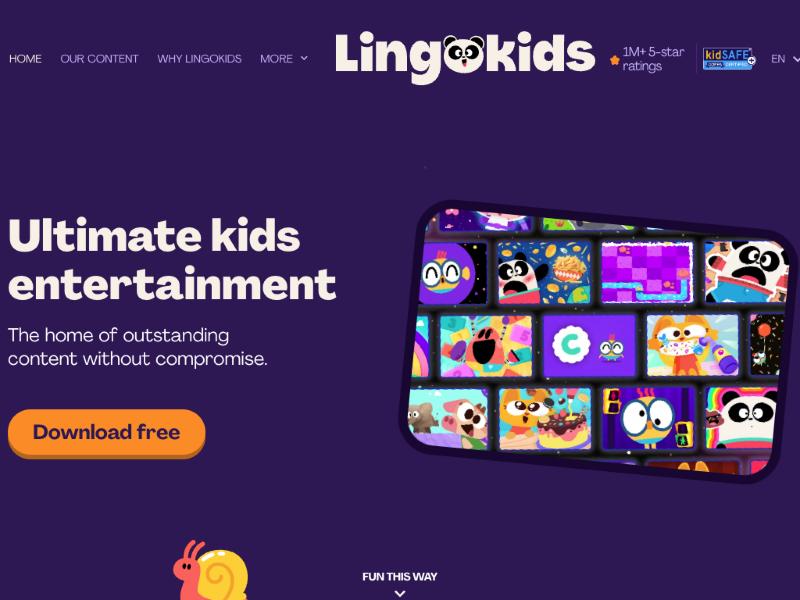
Search for a language app for your child and the first result is almost always Lingokids, a bright, well made and much loved app that is also, by its own description, "ultimate kids entertainment". That is not a criticism, but it does raise a fair question for a parent who wants a child to hear Spanish or German or Italian, which is whether a given app is a language course with games in it or a games app with some language in it. Below is a sorting of the better known ones, using only what each says about itself, with the pig in charge of the dream pillow.
We make one of these, LingoPlaytime, so you should read our opinion with a grain of salt, and we have tried to keep to facts that you can check on each site yourself. Prices, languages and age ranges change, so treat everything here as a snapshot from mid November 2026.
Lingokids: broad and polished, light on language
Lingokids is aimed at ages two to eight and describes itself as the home of games, shows and songs, and its own page title says it offers them in three languages. The content is mostly English, Spanish and Portuguese, which suits a family that wants an English-learning app for a Spanish-speaking child, and it is a subscription after a trial. If your goal is to get a child to learn Italian, however, this is not the shortest road, because the app is broader than that and says so itself.
Dinolingo: the most languages in one subscription
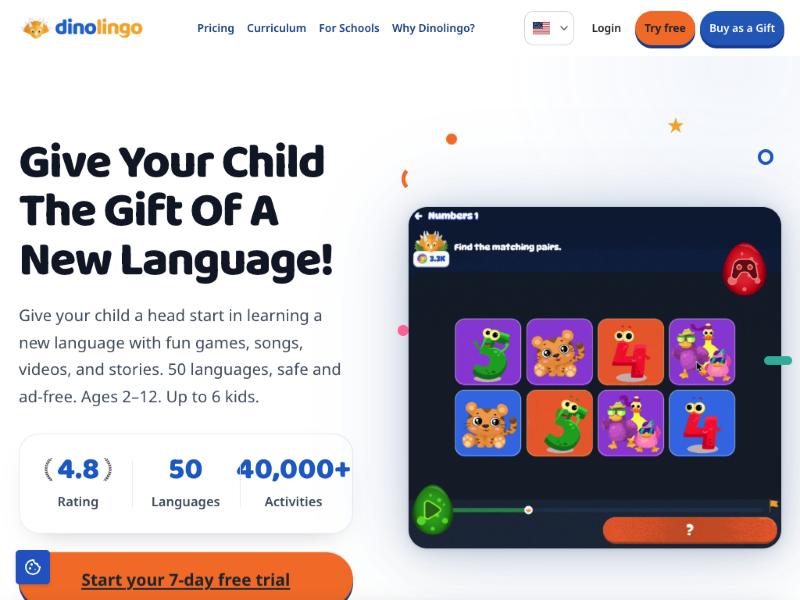
Dinolingo is the one to look at if you want a lot of languages for a family. Its home page says 50 languages, ad-free and safe, for ages two to twelve, with games, songs, videos and stories, and one plan covers up to six children after a seven-day trial. It is listed at around $19 a month or $199 a year at the time of writing, so it is a real commitment, but it is also a real language product.
Studycat and Lingumi: one language at a time
Studycat sells separate apps for Spanish, English, Chinese, French and German for ages three to eight, free to download with a paid plan and a seven-day trial, and Lingumi covers English, phonics, Spanish and Chinese with a similar model. Both are firmly about learning languages, and both ask you to decide on the language before you start, which suits a family that has decided and is less handy for one that speaks three.
Gus on the Go: a lovable owl with a long reach
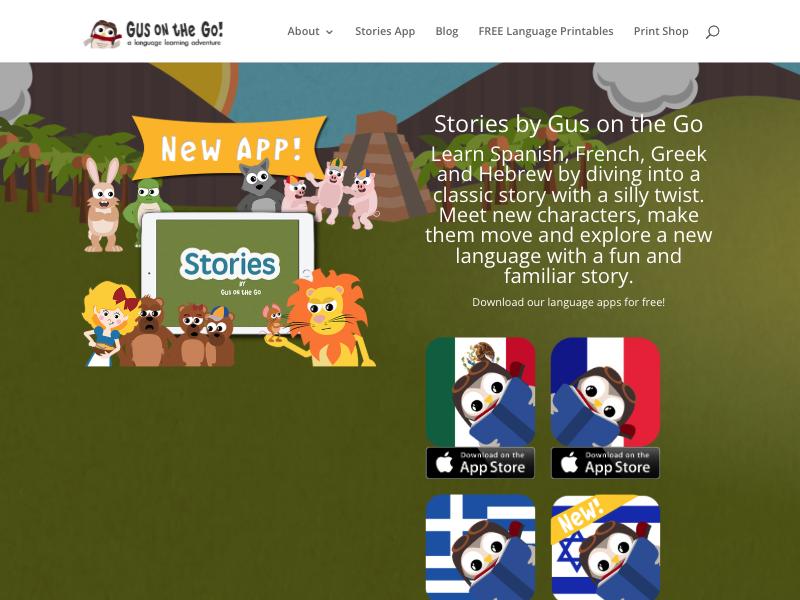
Gus on the Go is the old hand of the group, with an owl, a long list of languages and a set of Stories apps for Spanish, French, Greek and Hebrew that are free to download. It leans on vocabulary and short lessons, with a charming hand-drawn look, and it is a good fit for a child who is curious about a language that the big apps ignore.
LingoPlaytime: for the youngest, and for families who mix languages
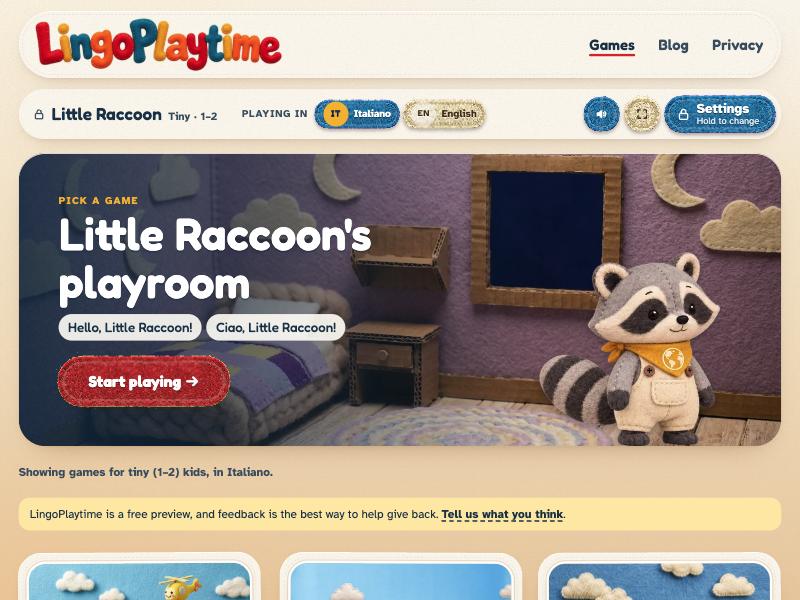
LingoPlaytime is our own and it is aimed at the youngest children, starting around age one. It is completely free with no ads and no accounts, runs in the browser, and has a growing list of games. What makes it different is that one child can hear up to four languages in the same game, chosen from English, German, Spanish, French, Italian and Portuguese, which suits families where more than one language is spoken at home. It is a free preview with single words and no progress tracking, so it is a toy and not a course, and for older children or serious study one of the apps above will take you further.
How to pick
If you want a general kids app with a bit of language tucked in, Lingokids is the polished choice. If you want a proper course with many languages, Dinolingo is the broadest, and Studycat or Lingumi are more focused if you have one language in mind. If your child is under three and your family mixes languages at home, or you simply want something that costs nothing while you find out what works, give LingoPlaytime a go. And whichever you choose, the research and common sense agree on the same thing, which is that a child learns most from a person who speaks the language to them, with the app being the sticker book that goes with it.
Questions people ask
Which kids language apps actually teach languages?
Studycat, Dinolingo, Gus on the Go and Lingumi are built around language learning for children, and LingoPlaytime is too, for the very young. Lingokids describes itself as kids entertainment with learning inside, and its content comes mostly in English, Spanish and Portuguese.
Which kids language app covers the most languages?
By their own pages, Dinolingo covers 50 languages in one family plan and Gus on the Go lists about 30, while Studycat sells separate apps for five languages and Lingokids offers its content in three. LingoPlaytime offers six and plays up to four of them to one child at once.
Are there free language apps for toddlers?
LingoPlaytime is completely free, with no ads and no accounts. The Gus on the Go Stories apps are free to download, and Studycat and Lingumi have free downloads with paid plans, while Lingokids and Dinolingo offer trials before a subscription. Prices and plans change, so check each app before you commit.
A note from the part of the company that is awake: LingoPlaytime is ours. Facts about the other apps come from their own sites and app store listings in mid November 2026, and some come second hand, so check the current details with each app before you pay anyone.