
LingoPlaytime is live: free language games for toddlers, and more on the way
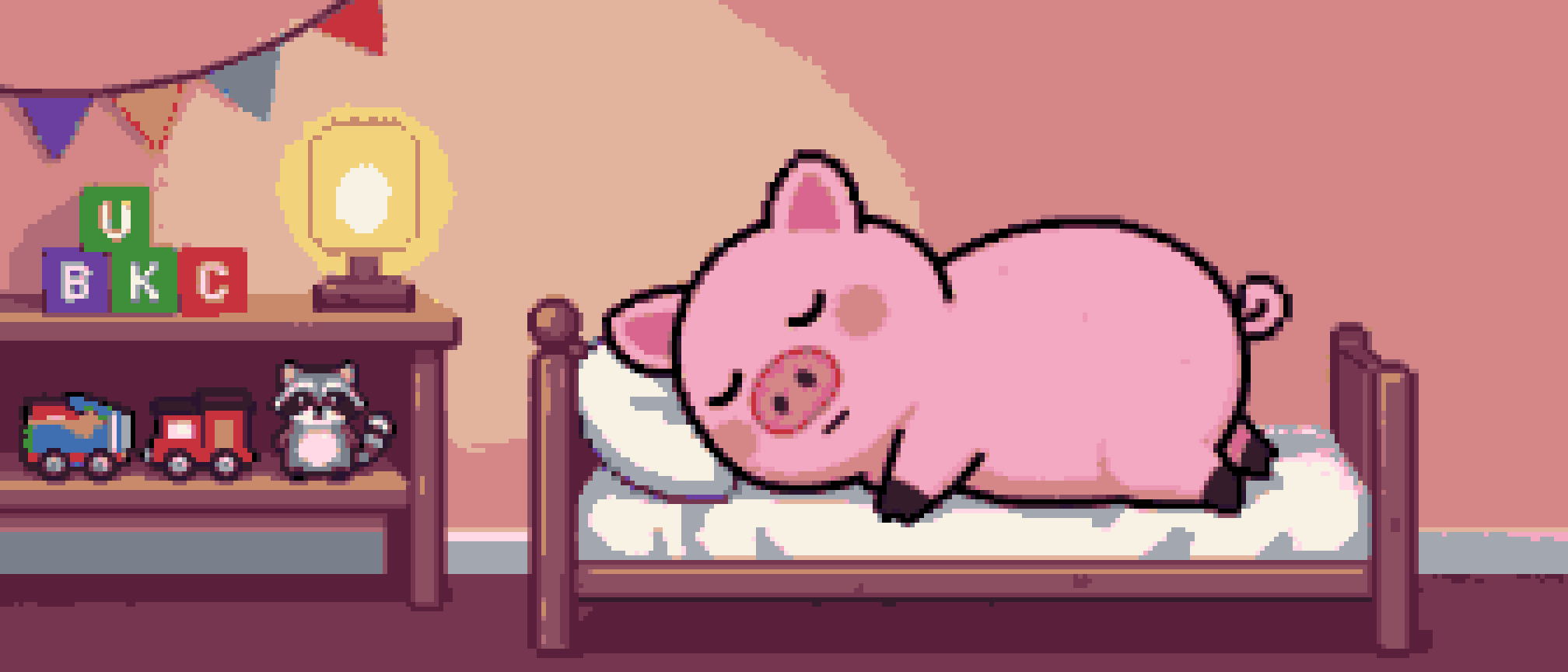
The pig has put a raccoon on the shelf, a few letter blocks on the floor and a free language playroom on the internet, and it is ready for visitors under the age of three.
LingoPlaytime has opened its doors, it is a website of language games for toddlers, and it is completely free. There are no ads, no accounts, no trial that ends and no password to forget at the exact moment a child is holding the tablet, and the list of games grows every few days, so the room you see today will have a few more toys in it next week. The pig supervised the opening from his bed, which is his way of saying that he approves.
The idea began with a very ordinary problem: in a family that speaks more than one language, the child has to meet each language often enough to keep it, and a parent with a sleepy toddler on the sofa does not always have a plan. LingoPlaytime is meant to be the plan. A child plays a little game, a word is spoken, and the word is spoken in whichever of the languages that family has chosen, so the same apple, door or train is named in two, three or four ways without anybody giving a lesson.
What a game looks like
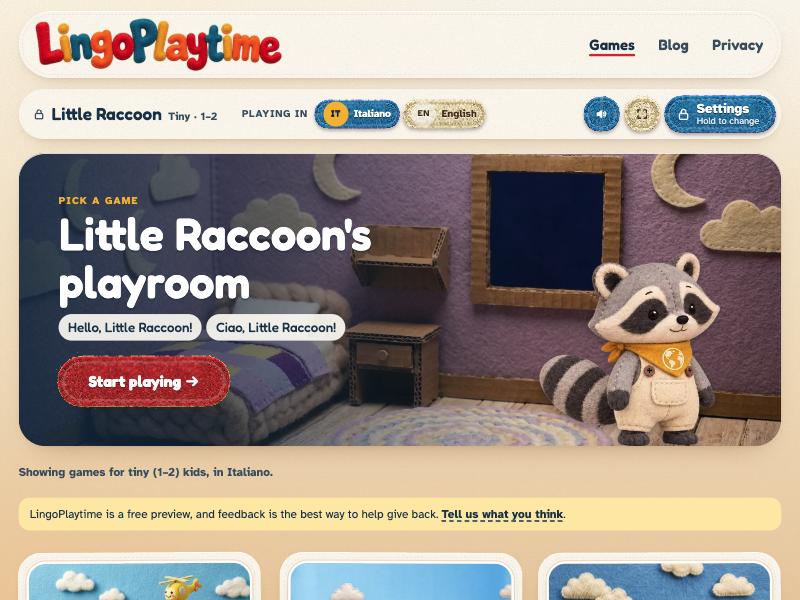
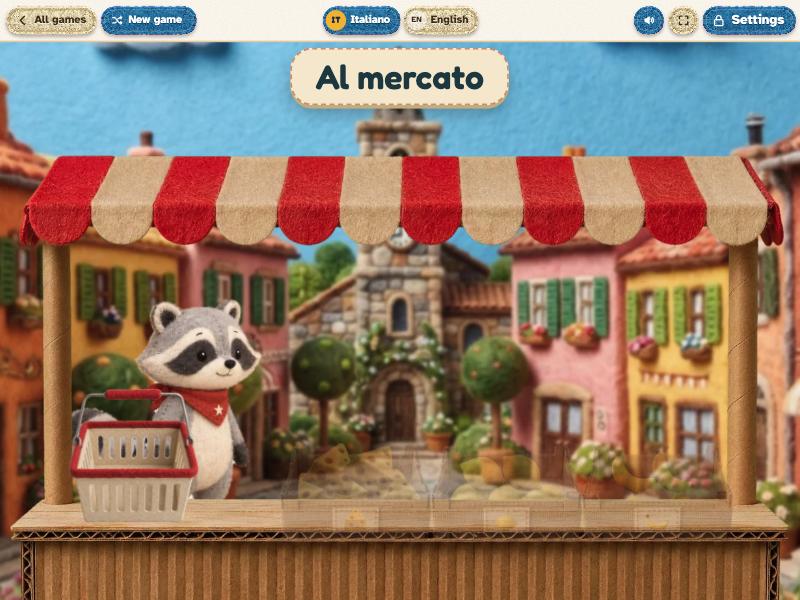
Each game is one small scene made to look like a stop-motion diorama of felt and cardboard, with a little raccoon in charge of the room. You pick a game from the playroom, the child taps or drags something, and a voice says the word. In the market game the raccoon asks for fruit, bread or cheese and the child taps what was asked for into the basket, which is about as much pressure as a toddler should ever be put under before lunch.
Your child, your languages
You choose up to four languages for each child, and the games speak all of them, so a child with a German grandmother, an English father and a Spanish nursery can hear all three without the family having to juggle three apps. The games can also work the child's own name into the words, which turns out to be the most reliable way known to science of getting a two-year-old to look at a screen.
What it is not
It is not a curriculum, and it does not teach reading, maths or grammar or track progress with charts. It works on single words and sounds, in short bursts, and it is meant to be played alongside a grown-up who can say the word too, because a child learns a language from the people they love more than from any speaker. We would rather be honest about that than promise a child fluent by Easter.
Free, and growing
Everything is free to play right now, and we would like to keep it that way for as long as we reasonably can. New games turn up often, and the best way to shape the next one is to tell us what your child gets stuck on, laughs at or ignores, using the feedback link on the site. If your family speaks more than one language, go and open the playroom, and if it does not, the raccoon is still happy to have you.
Questions people ask
Is LingoPlaytime free?
Yes. LingoPlaytime is completely free to play, with no ads and no accounts, and the list of games keeps growing.
What languages does LingoPlaytime teach?
It plays words aloud in up to four languages for each child, so a child who hears English, German and Spanish at home can hear all three in the same game. Languages on offer include English, German, Spanish, French, Italian and Portuguese.
How old does a child need to be?
The games are made for small children, starting around age one, and are meant to be played together with a parent or carer. They work on single words and sounds, not on reading, writing or grammar.
A note from the part of the company that is awake: LingoPlaytime is ours. The descriptions above come from the LingoPlaytime site itself and may have changed by the time you read this.