

Market research, conducted lying down
We set out to crush our competitors. It went badly, and we have some recommendations.
Every serious software company has a competitive intelligence function, so last week we gave ours to the pig, who accepted the role without waking up. Pigs are, after all, the industry standard for finding valuable things buried in dirt, and the internet is a very large field. The pig also asked for a red seaplane and a quiet cove to work from, which we filed under expenses and then ignored. The brief was simple: root out the other small companies that keep a little shelf of applications on one website, work out how they plan to destroy us, and report back with a slide.
There is no slide. What follows is the full report, written up from the websites these companies publish about themselves, because going any further would have meant standing.
The company that got to the joke first
We had assumed that a software company named after laziness was the boldest branding decision of the decade, and then we found Vibe Slop Software, whose tagline is "Silly name. Seriously good apps." This is roughly the sentence we have been trying to say about ourselves for a year, delivered in five words by someone else. We salute anyone brave enough to put a joke on the sign and then back it up.

Their shelf holds No Spoilers, a browser extension that hides sports results until you have watched the game, and Handful, which turns a photo of a recipe into a shopping list, free and with no ads or in-app purchases. They say outright that they build quickly with AI and then polish by hand, which is more candour than we had budgeted for. We have opened a file on them. The file says "nice".
This little studio went to market, this little studio stayed home
A single search returned Tiny App Studio. Then it returned Tiny App Studio. These are two separate companies, and the nursery rhyme has never been more useful as a filing system. The one at tinyapp.studio makes iPhone apps with the motto "We create apps that help humans", including a journal, a word game and Doggos!, a countdown app, and we note that nobody has yet asked whether it helps pigs.
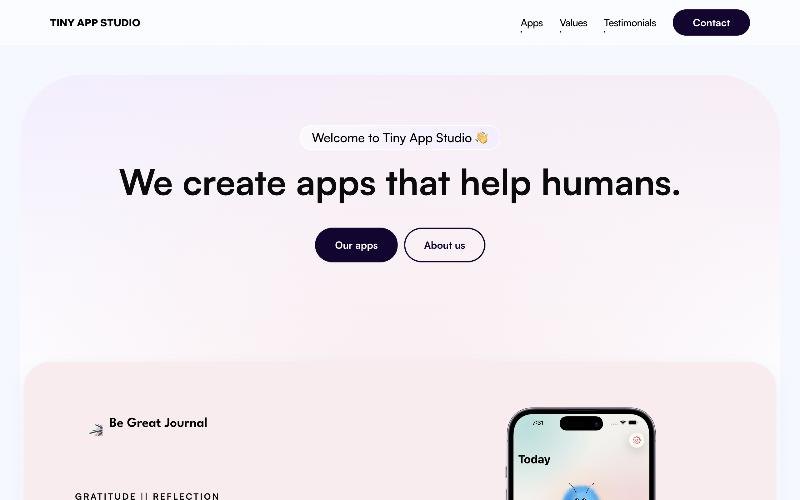
The one at tinyappstudio.io asks "What if we made that?" and then appears to have gone the whole hog and made everything, from Zen Rooms, where you decorate miniature rooms, to Lagoon Rush, a speedboat racer that runs in the browser with no download.
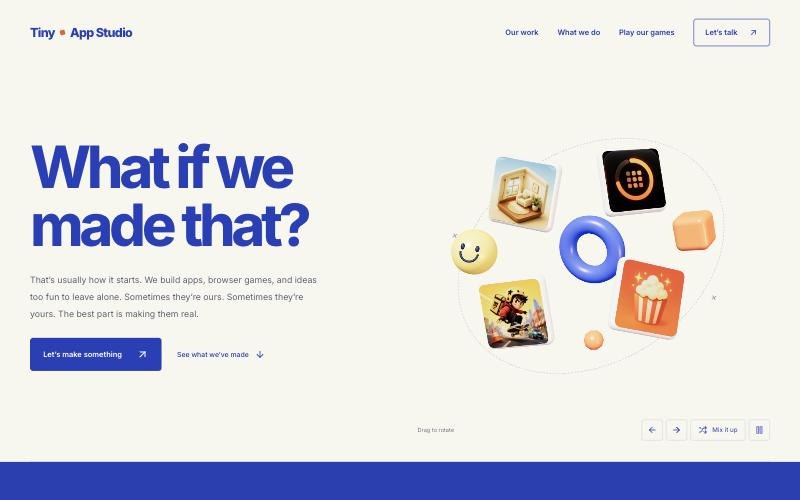
We have no idea whether either has met the other, and we would pay real money for that lunch. Our strategy team, who was asleep at the time, notes that nobody else is called Pigrosoft, and regards this as the one fight we have won.
The rodent in the next pen
Our mascot's sense of security did not survive Capytools, a set of browser utilities that appears to be run by a capybara, under the tagline "Calm little tools, quiet by default." A directory told us there were eleven tools, so we went to check and counted seventeen, which is the most alarming thing that has happened to us this year. Somebody over there is awake.
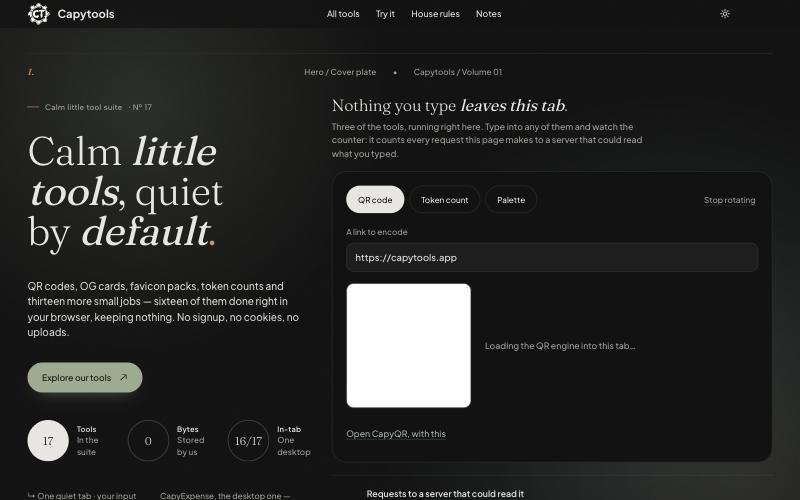
You get CapyStrip for removing the metadata from photos, CapyPassport for cropping your face to government standards, and CapyTone, which turns a mood into a colour palette and poster and is marked "No AI", a label that has become the software world's "contains no nuts". The files stay in your browser, and there is no signup. We looked for a weakness and found that the capybara is, if anything, calmer than the pig, which we consider hogging the brand.
Two neighbours with better manners
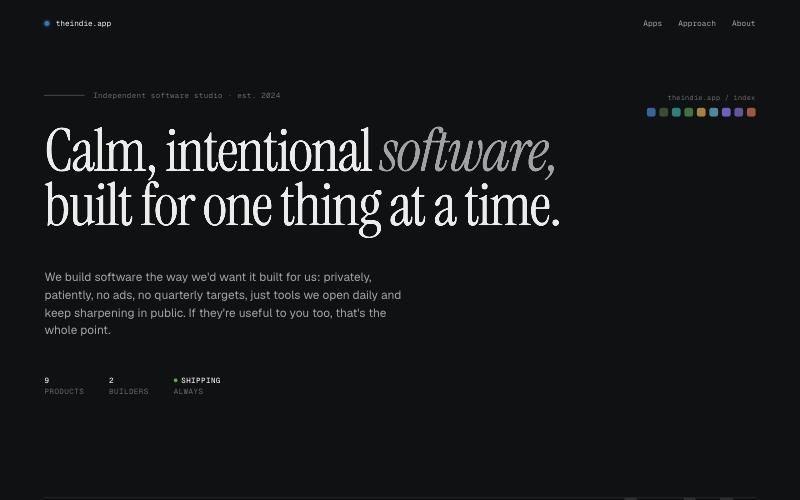
theindie.app describes its work as "Calm, intentional software", and says it builds without ads or quarterly targets. We, too, have no quarterly targets, though in our case this was an oversight. Two people keep nine products here, among them FastTab, a command bar for your browser tabs on the Mac, and Pineapple Log, a private timeline with the feel of a diary, a name we would have rejected in a meeting and then thought about for days.
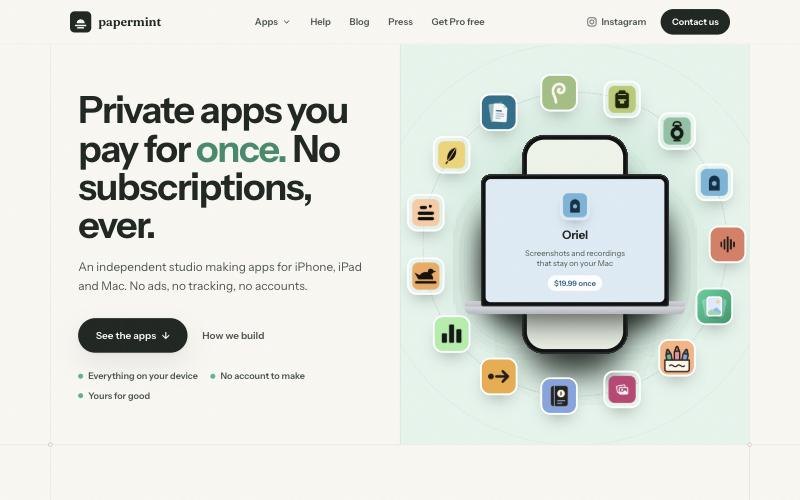
Then there is Papermint Studio, whose line is "Private apps you pay for once. No subscriptions, ever." We keep a house rule that says more or less the same, and were feeling rather good about it until we counted fifteen apps on their shelf, against our two and a question mark. Roost restores your Mac's window layout when the displays change, which is the kind of problem that ruins a morning and that nobody ever thanks you for fixing. Tacet is a clipboard manager that hides your keys. Each of these names sounds like a small good decision, and we find that upsetting, especially since a roost is for chickens and they still got there before us.
Truffles under the tree
The strangest find belongs to Simon Willison, who keeps a page of small tools, built mostly with the help of language models as a low-stakes experiment. It stood at 78 tools in March 2025 and has kept growing since. Most of them are useful. One of them is Tree Appreciator.
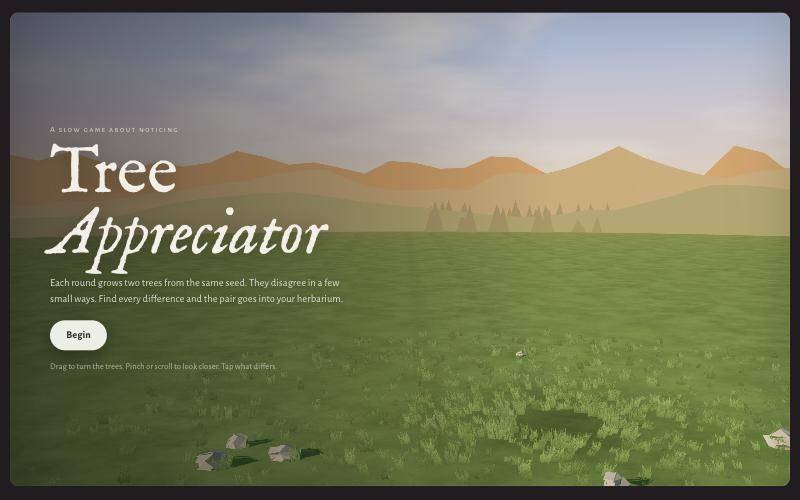
Tree Appreciator shows you two trees grown from the same seed and asks you to find the small differences between them. It calls itself "A slow game about noticing", and when you finish a pair it goes into your herbarium. There is an Appreciation counter. We set out to do competitive analysis on this and came to some time later having noticed three differences in a tree, and we consider it the most effective piece of sabotage in this report.
Those who went the whole hog first
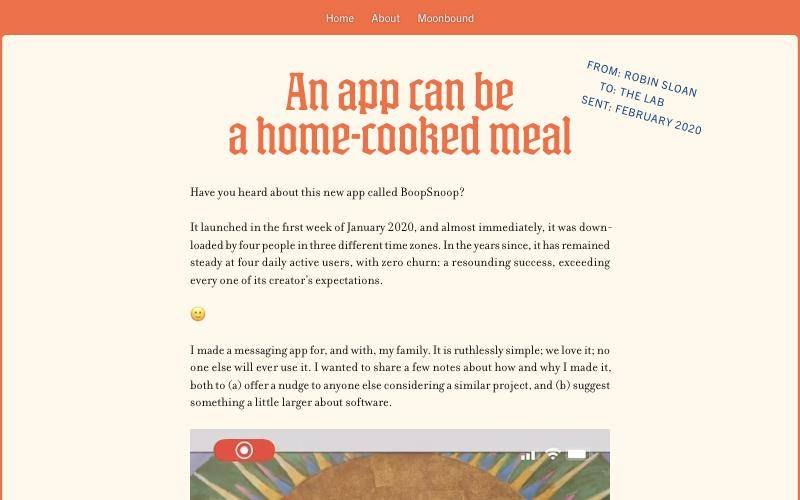
None of this is new, and we should admit that before someone writes in. Back in 2020 Robin Sloan wrote "An app can be a home-cooked meal" about BoopSnoop, a messaging app he made for his family alone, reporting "four daily active users, with zero churn". We have seen a great many metrics in our time and that remains the finest one in software.
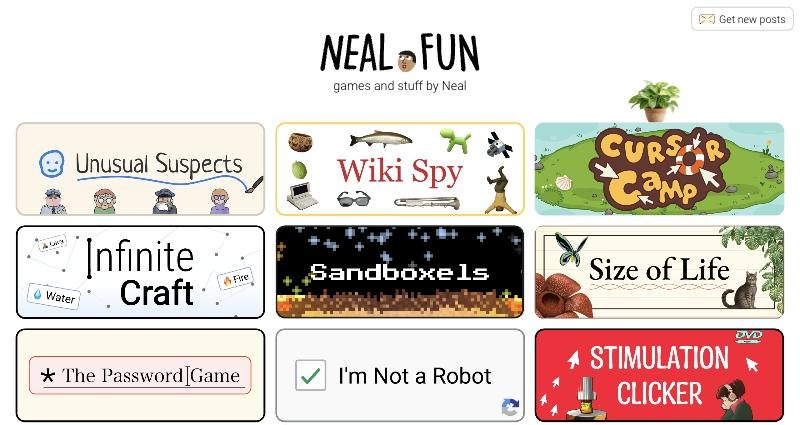
Meanwhile Neal has spent years putting things like The Password Game and Infinite Craft on one modest page, and if you have lost an afternoon to any of them you know the man is a menace to productivity, which makes him the nearest thing we have to a hero.
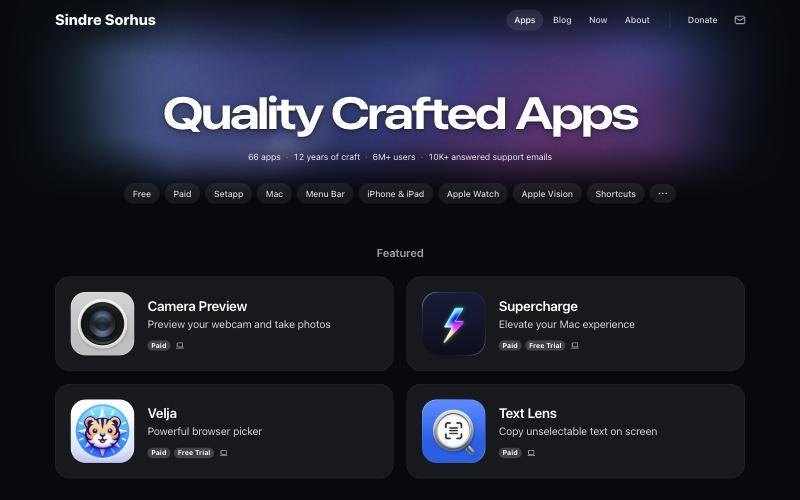
Sindre Sorhus lists 66 apps, one of which is Googly Eyes, which puts watchful eyes in your menu bar. We installed nothing, on principle, but we felt watched anyway.
Findings
The competition is doing well, has better names than it needs, and in several cases agrees with us about accounts, ads and subscriptions, which makes them very hard to compete with and very easy to recommend. We came for the bacon and left with a reading list. We recommend no action. The pig has reviewed this recommendation and endorsed it by continuing to sleep.
A note from the part of the company that is awake: everything above comes from each maker's own website, and the screenshots are from the day we looked, 3 November 2026. We have not tested their apps, so treat this as a list of places to visit rather than a set of reviews. Only Vibe Slop Software and Simon Willison say on those pages that AI does a good share of the building, so please don't assume it of the others. We have no connection to any of them.
If you keep a small shelf of software, or you know someone who does, squeal at support@pigrosoft.com. The pig will want to open a file on you.